
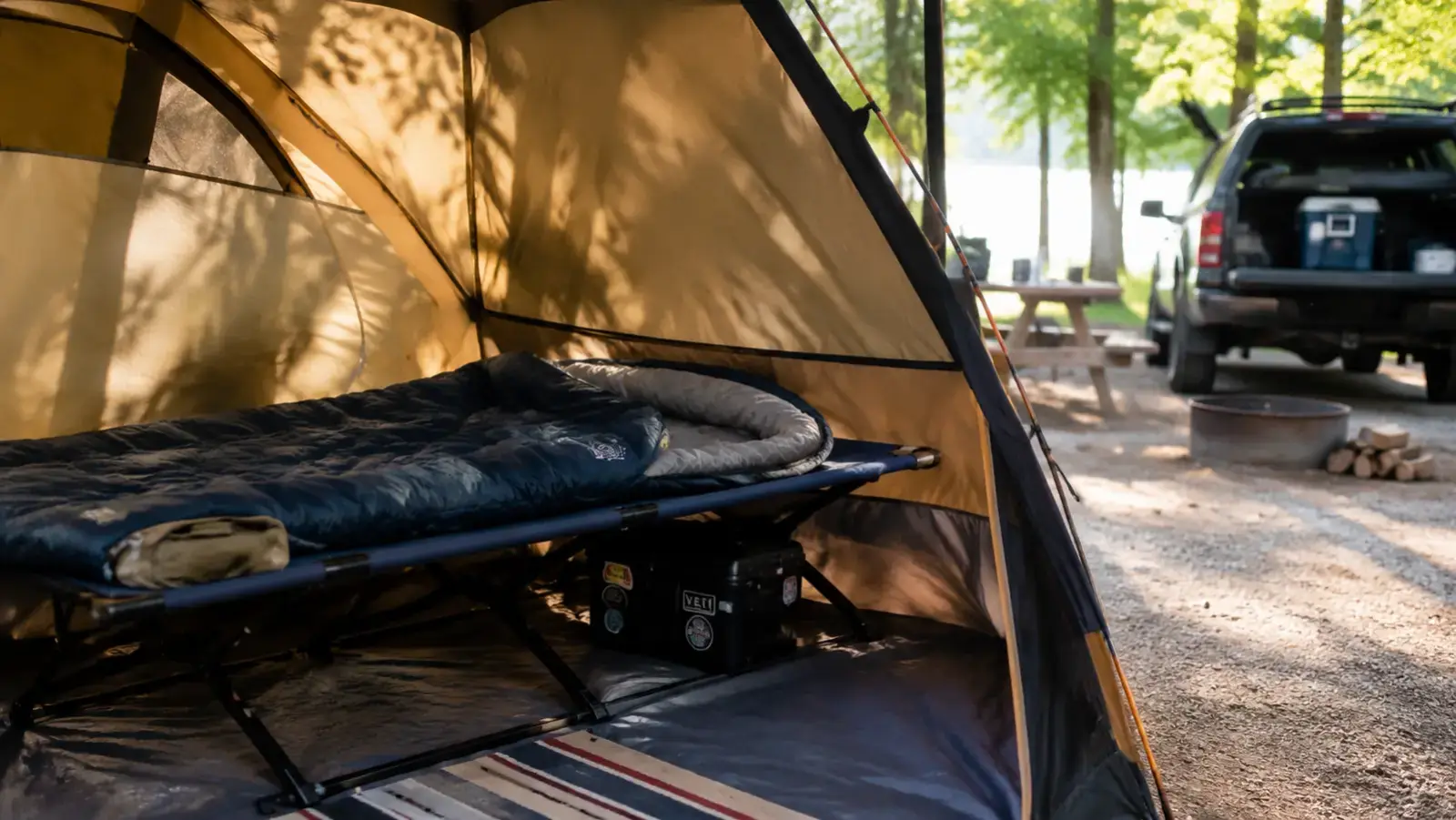
I have walked past a lot of bad nights of sleep. Nine seasons as a campground host at an Ozarks state park in northern Arkansas, checking roughly forty occupied campsites a night from April to October, and the complaint I heard more than any other wasn't bears or mosquitoes, it was campers who woke up stiff and cold because they'd spent the night on the ground. Air mattresses go flat by 3 a.m. Foam pads slide off to one side. A cheap sleeping pad does almost nothing once the ground pulls the heat out of you, and I lost count of the mornings I'd walk the loop and see someone rubbing their lower back before they'd even had coffee. So when I picked up the ARAER Camping Cot to replace the sagging air mattress I'd been dragging out of my 2011 Toyota Tacoma for two seasons, I already knew exactly what I was hoping it would fix.
This isn't a one-weekend review. I ran this cot as a spare bed in the back of my 22-foot travel trailer on Loop B for most of a season, for family who visited on weekends, and I slept on it myself for stretches of a couple weeks at a time when the park ran long enough hours that I set up a tent near the gate instead of walking back to the trailer every night. That gave me a real range of use across different sleepers, different body weights, and different weather, not a single night's impression, and it's the only kind of review I trust enough to write.
The Quick Verdict
A genuinely sturdy camping cot rated to 450 pounds that sleeps warmer and steadier than an air mattress through a full season of use, if you have the truck space to haul it and don't mind a little setup noise at first.
Amazon Check Today's Price →Tired of waking up stiff and cold on the ground every trip?
The ARAER Camping Cot lifts you off the cold ground on a steel frame rated to 450 pounds, and it held its shape through a full season of near-nightly use at my host site. Check today's price on Amazon before your next trip.
Amazon Check Today's Price on Amazon →How I've Used It
The ARAER cot went into rotation as the guest bed in the back nook of my trailer first, for family who came through on weekends and didn't want to sleep on an air mattress on the trailer floor. That alone put it through several dozen nights of real body weight, different sizes of people, some who tossed and turned more than others, one who admitted upfront he was a stomach sleeper and figured the cot would bother his shoulders, which it didn't once he tried it. Later in the season I also used it myself, sleeping in a tent near the entrance station on stretches when the park kept extended hours and it made more sense to camp close by than to walk the loop back to my own site after midnight.
Because I checked roughly forty occupied campsites a night, I also watched a good number of other campers' cots, cheap and expensive, over the same season. I've seen the center support bar on a bargain cot bend under a heavier camper by week two. I've seen fabric tear loose from the frame rivets after one wet weekend, and I've seen more than one abandoned cot leaning against a dumpster at the end of a trip because it wasn't worth hauling home broken. That's the comparison point behind everything in this review, not just my own trailer but a full season of watching similar gear succeed or fail in front of me.
I'll say up front that this is a car camping cot, the kind that rides folded in a truck bed or a trunk to a site you drove to. It is not built for a backpacking pack, and I wouldn't try to carry it any real distance on foot. If you're weighing ounces for a trail trip, this review and this cot aren't for you.
The Steel Frame and the 450-Pound Rating
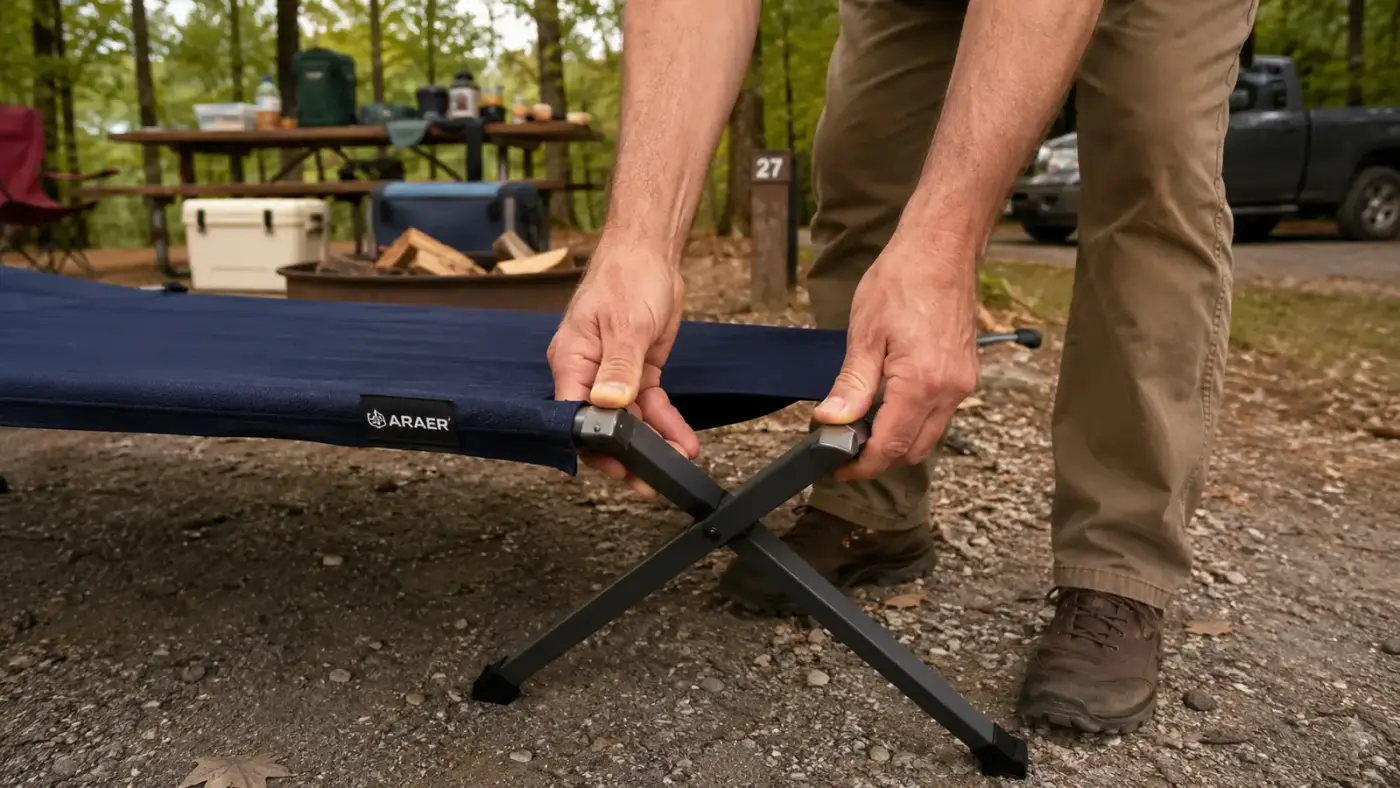
ARAER rates this cot to 450 pounds, and after a season watching it under real weight, I believe the number. The legs are a steel X-frame, thicker gauge tubing than what you get on the folding cots I've seen fail at other campsites, and the center crossbar has real heft to it rather than the thin rod some cheaper cots use to bridge the middle. That center bar is the first thing I check on any cot, because that's where I've watched sagging start on the weaker ones, usually within the first few nights if the cot is going to fail at all.
The X-frame legs lock with a straightforward push-down motion, and once locked they held their position through every setup I put them through, including a couple of nights on the uneven, root-crossed ground near the entrance station tent site. I never had a leg buckle or a lock slip loose in the middle of the night, which is the failure I've watched happen to other campers more than once, usually announced by a thump and some cussing around 2 a.m.
The one frame tradeoff is weight. This cot is close to 20 pounds folded up, and that's what buys you a 450-pound rating and a frame that doesn't flex under a heavier camper. If you're carrying it 20 feet from a tailgate to a tent, it's nothing. If you're hauling two of these plus a cooler and firewood any real distance from a parking lot to a walk-in site, you'll feel it.
Sleeping Off the Ground: Height, Fabric, and Warmth
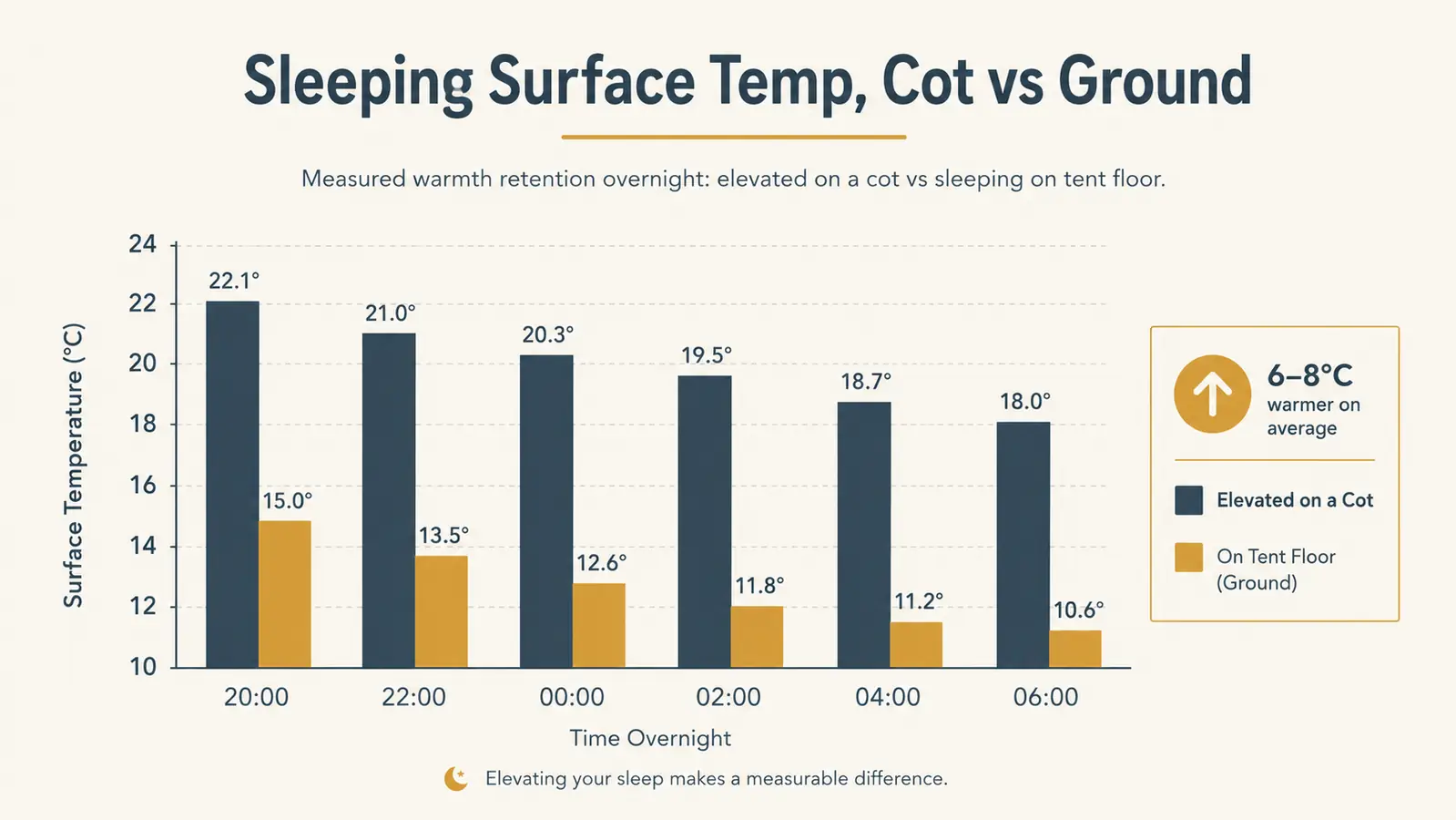
The single biggest difference between this cot and sleeping on a pad or an air mattress is the height. This cot sits roughly 15 to 17 inches off the ground, which does two things. It puts real air space between your body and the cold ground, and it gives you enough clearance underneath to slide a duffel bag or a pair of boots out of the way instead of tripping over them in a cramped tent. On cold spring and fall nights on Loop B, that air gap made a noticeable difference in how warm I slept compared to the air mattress I used before, even without adding a pad on top.
That said, a cot alone isn't a full insulation system. On genuinely cold nights, the fabric under you is still just fabric, and cold air can move underneath it. I added a foam pad or a folded sleeping bag liner on top for anything below freezing, and with that combination I never woke up cold, not once across the whole season. Without it, on the coldest nights, I could still feel a chill through the fabric by early morning.
The fabric itself is a heavier weave than I expected at this price, and it stayed taut across the frame the entire season. I never got the sagging hammock feel that some cheaper cots develop within a few weeks, where the middle drops low enough that you roll toward the center all night. It's also wide enough that side sleepers don't feel like they're going to roll off the edge, which was a real complaint I'd heard from campers using narrower cots in years past. If you're deciding between a cot like this and an air mattress for your setup, I put together a full side-by-side comparison against an air mattress that covers the tradeoffs in more depth than I can here.
Setup Speed and the Carry Bag
Setup takes me under two minutes once I've done it a few times, and that includes locking all four X-frame leg sets and stretching the fabric flat. The first setup took closer to five minutes because the legs were stiff out of the box, but they loosened up after the first few uses and moved smoothly from then on. It's not a one-second pop-open like some tents, but it's fast enough that I never dreaded setting it up after a long day walking the loop.
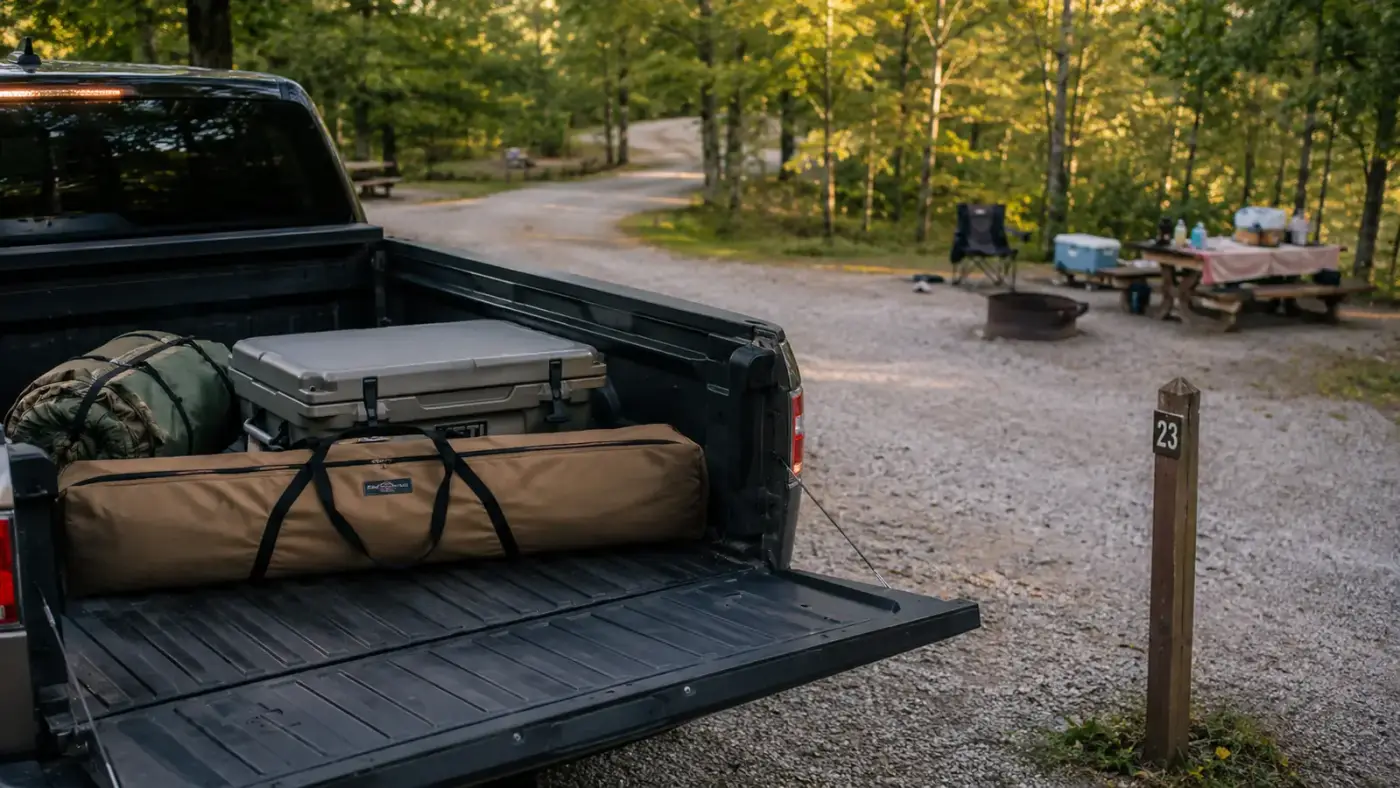
The included carry bag is sturdy canvas with a zipper that runs the full length, long enough to fit the folded cot without forcing it, which matters because I've watched other campers fight a too-small bag until the zipper teeth gave out. In the bed of my Tacoma, the bagged cot took up about the same space as a rolled two-person tent, and it stacked flat enough that it didn't fight with the cooler or the firewood for room. The bag also has a shoulder strap, which I didn't expect to use much but ended up appreciating on the two nights I carried it from the parking area to the tent site by myself.
Where It Struggled
No piece of gear gets a perfect score from me, and this cot has real flaws worth knowing before you buy. The first is noise. When you shift your weight or roll over, the frame gives a soft creak at the leg joints, especially in the first few uses before everything settled in. It quieted down over the season but never went completely silent, and if you're sharing a small tent with someone who's a light sleeper, that's worth knowing.
The second is that same weight I mentioned with the frame. At close to 20 pounds, it's not a cot you want to carry any real distance, and it takes up more truck bed space than an air mattress that rolls down to the size of a pillow. If you're tight on vehicle space or hiking any distance to your site, that's a real cost.
The third thing I noticed by late in the season was light wear at the fabric-to-frame stitching near the foot end, where the fabric loops over the end bar. It never tore and it never affected the sleep surface, but I noticed the stitching starting to fray slightly, and I'd rather flag it now than have you discover it in month six.
What I Liked
- Genuinely rated and built for 450 pounds, with a steel X-frame that held steady on uneven, root-crossed ground
- Elevated roughly 15 to 17 inches off the ground, a real improvement over ground sleeping for warmth and comfort
- Fabric stayed taut all season with no sagging hammock effect down the middle
- Wide enough that side sleepers don't feel like they're near the edge
- Setup takes under two minutes once the legs are broken in
- Carry bag is sized generously with a shoulder strap and the zipper never fought me
Where It Falls Short
- Frame creaks softly at the leg joints, more noticeable in the first few uses
- Heavy at close to 20 pounds, more truck bed space needed than an air mattress
- Fabric-to-frame stitching at the foot end showed light fraying by late season
- Not enough insulation alone on freezing nights without adding a pad on top
I've watched a lot of campers wake up sore and cold because they slept on the ground. A full season on this cot, and that stopped being my problem.
Who This Is For
This cot is built for car campers and campground campers who drive to a site and have truck bed or trunk space to spare. It's a strong fit for anyone tired of air mattresses that go flat overnight, for bigger campers who need a bed rated well past the usual 250 or 300 pounds, and for anyone who wants gear stored underneath their sleeping surface instead of stacked in the corner of a small tent. If you camp the way I hosted, staying in one spot for several days at a time, the setup time and the extra weight in the truck stop mattering fast, and having a reliable, elevated bed makes every morning easier.
Who Should Skip It
If you're backpacking, canoe camping, or packing a compact hatchback where every inch of trunk space is already claimed, this isn't your cot. The weight that makes it sturdy also makes it a poor fit for anyone carrying gear any real distance on foot. I'd also skip it if you're an occasional camper who only gets out once or twice a year, an air mattress will do the job fine for a couple of nights a summer. For a more blunt breakdown of the tradeoffs, including a few things I only noticed after using this cot for months, I wrote an honest review covering what nobody tells you upfront.
Ready to stop sleeping on the ground?
After a full season of near-nightly use at my host site, the ARAER Camping Cot is the one I'd buy again. Check today's price on Amazon and see if it's in stock before your next trip.
Amazon Check Today's Price on Amazon →